
Ribbit Capital Highlights "Neo-Utility" Investment Trend
Key takeaways
- "Neo-Utility" is an emerging concept in the investment landscape.
- Ribbit Capital is identifying and discussing this trend.
- Understanding new business models is crucial for strategic planning.
- Venture capital letters can offer insights into future market directions.
Who benefits
Summary
The post expresses enthusiasm for "Neo-Utility" companies, referencing a Power Letter from Ribbit Capital and listing several related entities.
Why it matters
This highlights a potential emerging investment trend or business model that could reshape various industries, signaling areas of future innovation and capital allocation.
How to implement this in your domain
- 1Research the "Neo-Utility" concept as defined by Ribbit Capital to understand its characteristics.
- 2Investigate the listed companies (Base, Somos, Meter) to identify their business models and market impact.
- 3Evaluate how the "Neo-Utility" framework might apply to your own industry or business strategy.
- 4Monitor venture capital firm publications for insights into emerging market trends.
Original post by @packyM
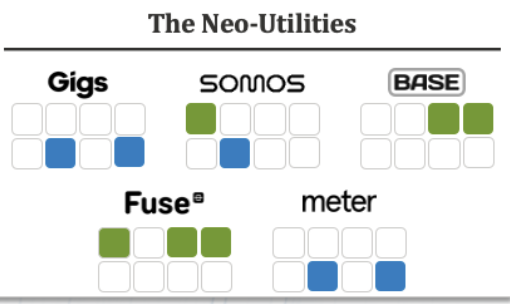
"I love a Neo-Utility. From the @RibbitCapital Power Letter: Base: Somos: Meter:"
View on XPrimary sources
Originally posted by @packyM on X · view source
Want to go deeper?
Turn these trends into skills with Learnijoy's hands-on AI & tech courses.
Explore coursesMore in AI Investing
LLM Market Dominance: Why Big Labs Remain Unchallenged
The discussion explores why the Pareto frontier for large language models appears inefficient, with major labs maintaining significant market share and pricing power. Participants debate factors such as access to capital, compute resources, benchmark utility, first-mover advantage, and switching costs.
Adaptive Training Improves Risk-Aware Q-Learning for Finance.
This paper introduces an adaptive training controller for Conditional Value-at-Risk (CVaR) Risk-aware Q-learning (RaQL), significantly improving its stability and performance under finite budgets. Applied to Bitcoin trading, the controller reduced Bellman residuals by 85% and achieved a Sharpe ratio of 0.9281 with low volatility.
FinPerMA Benchmarks LLM Agent Personalized Memory in Finance
Researchers introduce FinPerMA, a new benchmark evaluating Large Language Model (LLM) agents' ability to maintain and update personalized user models over time, especially in high-stakes financial advising scenarios. It tests event-driven preference adaptation against frozen longitudinal investor trajectories, revealing that current frontier LLMs struggle significantly with personalization, particularly after material financial events.