
AI Investing news, in a minute a day
The latest AI Investing developments — each explained in plain language, with why it matters and how to apply it. Fresh briefs from Learnijoy NewsCenter.
LLM Market Dominance: Why Big Labs Remain Unchallenged
The discussion explores why the Pareto frontier for large language models appears inefficient, with major labs maintaining significant market share and pricing power. Participants debate factors such as access to capital, compute resources, benchmark utility, first-mover advantage, and switching costs.
Adaptive Training Improves Risk-Aware Q-Learning for Finance.
This paper introduces an adaptive training controller for Conditional Value-at-Risk (CVaR) Risk-aware Q-learning (RaQL), significantly improving its stability and performance under finite budgets. Applied to Bitcoin trading, the controller reduced Bellman residuals by 85% and achieved a Sharpe ratio of 0.9281 with low volatility.
FinPerMA Benchmarks LLM Agent Personalized Memory in Finance
Researchers introduce FinPerMA, a new benchmark evaluating Large Language Model (LLM) agents' ability to maintain and update personalized user models over time, especially in high-stakes financial advising scenarios. It tests event-driven preference adaptation against frozen longitudinal investor trajectories, revealing that current frontier LLMs struggle significantly with personalization, particularly after material financial events.
FinProBench Evaluates Financial AI Agents with Professional Rubrics
Researchers introduce FinProBench, a benchmark for evaluating financial AI agents using Role-Grounded Rubric Construction (RGRC), a pipeline that derives evaluation criteria directly from real professional deliverables. This method captures tacit industry standards, outperforming prompt-only rubrics for specialized roles and providing a more accurate assessment of AI agent performance in complex financial tasks.
New Math Results Show RSI Limitations Without Fresh Data
A recent analysis by Vishal highlights the inherent limitations of the Relative Strength Index (RSI) when applied without the continuous input of new information. The post uses recent mathematical findings to demonstrate how RSI's effectiveness diminishes under such conditions.
Abolish Non-Competes to Boost UK AI Entrepreneurship
The post argues that long non-compete clauses and gardening leave hinder British AI entrepreneurship. It suggests that the high opportunity cost of remaining at large tech companies is driving talent away, making it crucial to accelerate new company formation.
Google Announces Major AI Leadership Shakeup, Demis Hassabis New Role
Google has announced significant changes to its top AI leadership, with Demis Hassabis transitioning to Chair of Google DeepMind and Chief Scientist at Alphabet. Koray Kavukcuoglu, former DeepMind CTO, will now serve as Google's SVP of DeepMind, reporting directly to CEO Sundar Pichai.
SpaceX Revenue Primarily Telecom and Compute, Not Space
A recent analysis of SpaceX's first public quarterly earnings report reveals that the company's revenue is predominantly generated from its telecom and compute services, with the space sector contributing only about 10%.

Google AI Leaders Depart to Launch New Startup
Several prominent Google AI executives, including Jeff Dean and Oriol Vinyals, are leaving the company to establish their own startup. Investors reportedly funded the venture without extensive details, highlighting the team's reputation.
Emergence of 'Neo-Utilities' Blending Software and Infrastructure
The post highlights a new category of highly valuable companies, termed "neo-utilities," which seamlessly integrate software and infrastructure. These companies are disrupting essential, often unglamorous industries by prioritizing customer experience and innovation.
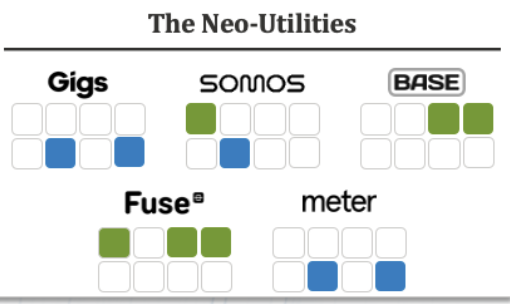
Ribbit Capital Highlights "Neo-Utility" Investment Trend
The post expresses enthusiasm for "Neo-Utility" companies, referencing a Power Letter from Ribbit Capital and listing several related entities.
FinVerse Benchmark Evaluates Financial Time-Series Models Realistically
FinVerse is a new financial time-series forecasting benchmark designed to evaluate foundation models more realistically than generic benchmarks. It includes a vast dataset and 78 domain-specific metrics, revealing that strong generic performance doesn't always translate to useful financial forecasts.
Turn AI Investing trends into skills
Go beyond the headlines with Learnijoy's hands-on AI & tech courses.
Explore courses